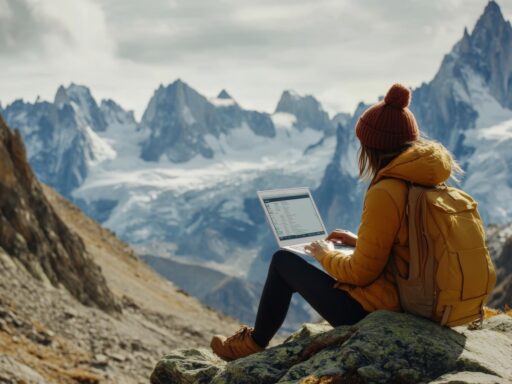



Have you ever dreamed of working from a café in Lisbon, a coworking space in Bali, or an apartment in Bangkok? You are not alone. More people than ever are doing exactly that in 2026, and it is more achievable than you might think.
But here is the honest truth. Remote work travel is not just about booking a flight and opening your laptop. People who do it well follow a clear set of remote-work tips that most blogs overlook. However, those who struggle skip preparation entirely.
This guide gives you the practical tips for remote work while traveling that actually make a difference, from confirming your setup before you leave to staying productive once you arrive. Furthermore, whether you are planning your first remote work trip or just thinking about it, start here.
Tip 1: Confirm Your Work Can Actually Be Done Remotely
This sounds obvious. However, it is the step most people rush. Before you book a single flight, confirm three things:
- Your employer permits international remote work. Many companies allow remote work within their home country but restrict working from abroad for tax and legal reasons. Have the conversation first. If your employer says yes, get it in writing.
- Your role does not depend on physical presence. Some roles that seem remote-friendly still require occasional office visits or in-person client meetings.
- Your internet requirements are manageable. Video editors, developers, and designers often need faster connections than many destinations can reliably provide. Know your minimum speed requirement before choosing a destination.
If you are self-employed or freelancing, your flexibility is much greater. In fact, many freelancers already work remotely and simply need to extend that setup. However, always inform your clients of your new arrangement and confirm that there are no contractual restrictions on working from abroad.

Tip 2: Tips for Remote Work Destination Choices
One of the most important tips for remote work travelers is to choose your destination based on work requirements, not just lifestyle appeal. A beautiful beach town with unreliable 5 Mbps internet will cost you clients and missed deadlines. Therefore, always research connectivity before aesthetics.
Before booking, check these for every destination you consider:
- Average internet speeds: Use Nomad List to check real nomad-reported internet speeds. Target destinations with average speeds above 25 Mbps for most work.
- Coworking space availability: Find spaces on Coworker.com. Even if you do not plan to use one daily, a nearby coworking space is a safety net if your accommodation’s Wi-Fi fails.
- Time zone overlap with your clients: A six-hour difference is manageable. A twelve-hour difference makes real-time collaboration extremely difficult.
- Cost of living versus your income: Your remote income goes further in Southeast Asia or Eastern Europe than in Western Europe or Australia.
For example, some of the most productive and affordable destinations for remote workers in 2026 include Chiang Mai in Thailand, Tbilisi in Georgia, Split in Croatia, Lisbon in Portugal, and Medellín in Colombia. For a detailed breakdown of the best budget cities in Europe, read our guide to budget digital nomad cities in Europe.
Tip 3: Never Rely on One Internet Source
Among all the tips for remote work while traveling, this one prevents the most crises. Your accommodation’s Wi-Fi will fail at the worst possible time, during an important video call or before a deadline. Therefore, always have three internet sources available:
- Accommodation wifi, your primary source. Before booking, search reviews for the words “wifi” and “internet” to see what previous guests reported.
- Local SIM card with data, your first backup. Buy one on arrival at any major airport or phone shop. Furthermore, it is usually the cheapest and fastest internet option available. A local SIM with 10 to 20 GB of data typically costs $5 to $15.
- Portable wifi hotspot, your emergency backup. Devices like Simo or Skyroam provide coverage across multiple countries without needing a local SIM for each destination.
Furthermore, always test your accommodation’s Wi-Fi speed on your first day using Speedtest.net. If it falls below your minimum requirement, move to a coworking space immediately rather than hoping it improves.
Tip 4: Build a Lightweight, Reliable Tech Setup
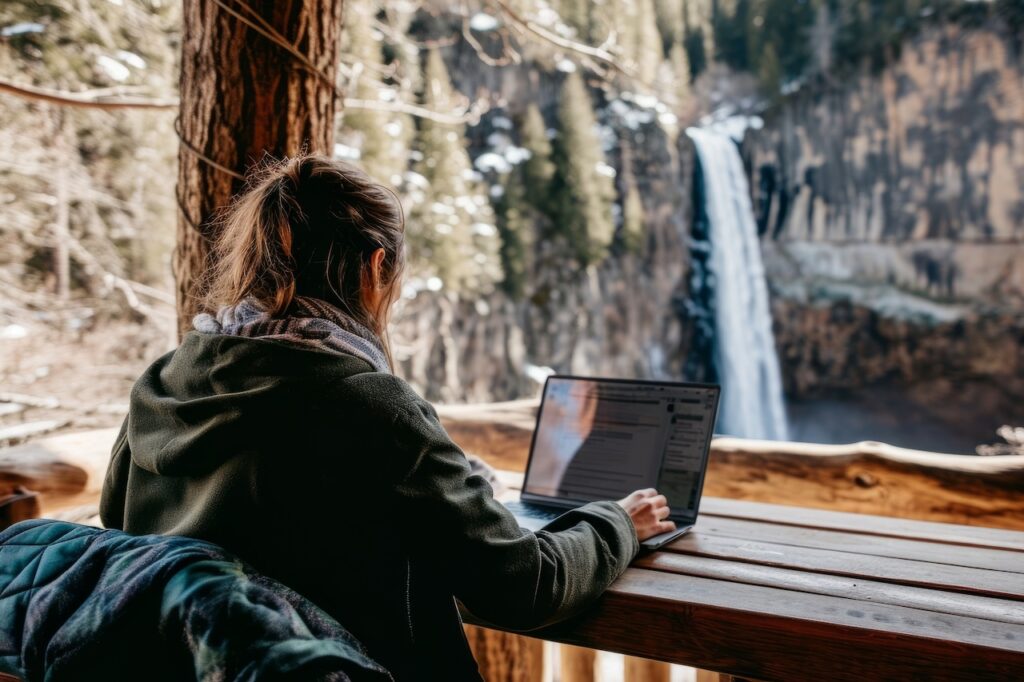
The right equipment makes tips for remote work easier to follow in practice. Carrying the wrong setup creates daily frustration. Therefore, invest in the right kit before you leave. Here is the essential kit for most remote workers:
- Lightweight laptop, a MacBook Air or slim Windows ultrabook. Weight matters a lot when you are moving regularly.
- Portable power bank, for café sessions and travel days when you cannot find a socket.
- Universal power adapter, different countries use different plug types, and one adapter covers all of them.
- Noise-cancelling headphones, essential for video calls from noisy coworking spaces. A good pair pays for itself on the first trip.
- Laptop stand and compact keyboard, optional but transformative if you work long hours. They prevent neck and wrist strain on extended trips.
Tip 5: Tips for Remote Work Apps and Tools
The right tools make remote work travel significantly smoother. In fact, having the wrong tools is one of the most common causes of productivity problems on the road. Therefore, install and test these before departure:
- ExpressVPN, protects your data on public wifi and maintains access to home-country banking and services. Non-negotiable.
- Notion, organizes your work tasks, travel plans, visa information, and notes in one place. Free for individuals.
- Slack, keeps you connected with remote teams without relying on email alone.
- Zoom, for video calls. Download it before you travel since some countries restrict access to certain platforms.
- Google Drive, cloud storage so your work is accessible from any device, anywhere.
- World Time Buddy, manages time zone differences with clients and colleagues clearly and simply.
- Nomad List, researches destinations by internet speed, cost of living, weather, and community size.
Tip 6: Switch to Travel-Friendly Banking Before You Leave
Financial preparation is one of the most overlooked tips for remote work travelers. Standard bank accounts charge heavy foreign transaction fees. Moreover, these add up significantly over months of travel. Instead, switch to these travel-friendly options before you depart:
- Wise, fee-free international transfers and a multi-currency debit card accepted in 170+ countries. It uses the real exchange rate with no hidden fees.
- Revolut, an instant currency exchange, offers free ATM withdrawals up to a monthly limit, and instant card freeze if it is lost or stolen.
Always carry cards from two different banks as a backup. Furthermore, build a financial buffer of at least two to three months of living expenses before you leave. Unexpected costs are inevitable. Therefore, having a cushion means you handle problems without panic.
Tip 7: Check Your Visa Before You Book Your Flights
Visa management is one of the most critical tips for remote work travelers. Getting it wrong results in fines, forced departures, or being banned from re-entering a country. Therefore, always confirm your visa situation before booking anything.
- The Schengen 90-day rule: Non-EU citizens can stay in the Schengen Zone for a maximum of 90 days out of every 180 days. This covers most of Western and Central Europe. However, a digital nomad visa removes this limit.
- Portugal Digital Nomad Visa: One year, approximately €180 fee. Apply at the official Portugal visa portal.
- Croatia Digital Nomad Permit: 18 months, full income tax exemption on foreign earnings. Apply at the Croatian consular portal.
- Estonia Digital Nomad Visa: One year. Apply at Estonia’s official portal.
- Georgia: Visa-free for up to one year for 95+ nationalities. No application required. Simply arrive. In other words, it is the easiest long-stay option for remote workers.

Tip 8: Tips for Remote Work Routines on the Road
Among all the tips for remote work on the road, establishing a daily routine has the biggest long-term impact. Without structure, most remote workers either overwork and miss their travel experiences or underwork and fall behind. Both outcomes are avoidable. However, they require intentional habits to prevent. Both are avoidable with the right habits.
Here is a routine structure that works well for most remote workers:
- Set fixed working hours and stick to them daily. For example, work from 8 AM to 2 PM and leave your afternoons entirely free for exploration.
- Use a coworking space at least two to three times per week. The structure of a professional environment dramatically improves focus compared to your apartment or a beach café.
- Batch your communication. Check emails and messages at set times, such as 9 AM and 1 PM, rather than constantly throughout the day. This protects your deep work time. Moreover, it signals professionalism to clients.
- Block out travel days entirely. Do not schedule calls or deadlines on days when you are moving between cities. Travel days are unpredictable enough without work pressure added.
Tip 9: Stay Longer in Each Place
One of the most underrated tips for remote work travelers is simply to slow down. Moving too fast is the most common mistake beginners make. Changing cities every few days is exhausting, kills productivity, and means you never experience any destination properly.
Aim for a minimum of two to four weeks per destination. This gives you time to find the best coworking spaces and establish a routine. Furthermore, you start to feel like a visitor rather than a tourist passing through. Moreover, longer stays unlock significant monthly discounts on accommodation, which substantially reduces your overall costs.
Tip 10: Get Travel Insurance Before You Leave
The final and most important of all tips for remote work travelers is this: never leave without travel insurance. As a remote worker abroad for extended periods, the financial consequences of being uninsured are far greater than for a typical tourist. In other words, one medical emergency without coverage can wipe out months of savings.
We recommend SafetyWing for remote workers. It is designed specifically for digital nomads, covers medical emergencies in 185+ countries, and is billed monthly so you can adjust coverage as your plans change. You can also compare plans on InsureMyTrip to find the right level of coverage for your situation.
Pre-Departure Checklist: Tips for Remote Work Travelers
Use this checklist before you depart. In summary, it covers all the key tips for remote work travelers in one simple action list. It summarizes the key tips for remote work travelers into one simple action list:
- ☑️ Employer or clients have confirmed international remote work is permitted
- ☑️ Destination researched for internet speed, coworking spaces, and time zone compatibility
- ☑️ Local SIM card plan identified for your destination
- ☑️ Wise or Revolut card set up and loaded
- ☑️ Emergency fund of 2 to 3 months expenses in place
- ☑️ Visa requirements confirmed for your nationality and destination
- ☑️ Travel insurance active before departure
- ☑️ ExpressVPN installed and tested
- ☑️ Important documents backed up to Google Drive
- ☑️ First night accommodation booked with confirmed desk and fast wifi
Useful Resources for Remote Workers
- 🌍 Research destinations: Nomad List
- 💼 Find coworking spaces: Coworker.com
- 🏨 Find accommodation: Airbnb | Booking.com
- 💳 Travel banking: Wise | Revolut
- 🛡️ Travel insurance: SafetyWing
- 🔒 VPN: ExpressVPN
- 💻 Find remote work: Upwork | Remote OK | We Work Remotely
- ⏰ Time zone tool: World Time Buddy
- 📶 Internet speed test: Speedtest.net
More guides for remote workers and digital nomads: